If you’ve ever been behind the wheel and heard a dull, repetitive clunking sound when going over small bumps, turning tight corners, or even just pulling out of a parking spot, you know how frustrating that noise can be. It’s not just annoying—it’s a sign something’s wrong with your vehicle’s suspension, and ignoring it can lead to bigger problems down the line. As someone who’s spent years supplying sway bar links to mechanics, repair shops, and everyday drivers, I get asked this question all the time: Can a bad sway bar link bushing cause that clunking noise? The short answer is yes, and it’s one of the most common culprits for that annoying suspension rattle. Let’s break down why, what happens when these parts go bad, and how to tell if it’s time to replace them. Sway Bar Link
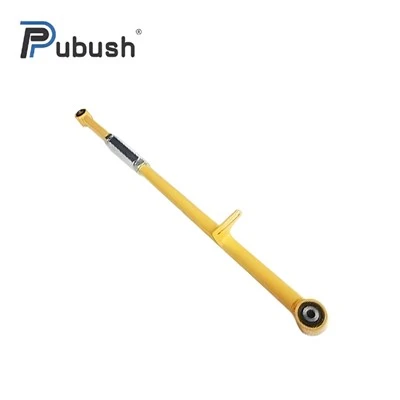
First, let’s make sure we’re on the same page about what a sway bar link bushing does, because it’s easy to mix up parts in a car’s suspension system. The sway bar (also called a stabilizer bar) is that thick, metal rod running horizontally under your car, connecting the left and right sides of the suspension. Its job is simple: keep your car stable when you turn, lean less during cornering, and prevent that side-to-side sway that makes a ride feel bouncy or wobbly. The sway bar links are the small, rigid metal arms that connect the ends of the sway bar to your vehicle’s control arms or struts. And the bushings? Those are the rubber (or sometimes polyurethane) rings that fit over the ends of the sway bar link, where it attaches to the sway bar itself and to the chassis or suspension component.
So why would a bad bushing cause a clunk? It all comes down to movement. The bushings are designed to be flexible enough to let the sway bar do its job—twisting slightly when you turn, absorbing small vibrations from the road—but firm enough to keep the link secured, so there’s no unwanted play. Over time, those bushings take a beating. They’re exposed to everything from rain, salt, and road grime (especially in colder climates where salt is used to melt ice) to constant stress from the sway bar twisting hundreds of times a mile. The rubber hardens, cracks, or tears, and the polyurethane ones can break down from UV exposure or extreme heat. Once that happens, the link no longer sits tight against the sway bar or the chassis. There’s excess play, or slop, between the metal parts.
When your car goes over a small bump, like a speed bump, pothole, or even a expansion joint in the road, that loose sway bar link can move around instead of staying in place. Every little shift from the weight of the car, the sway bar twisting, and the road’s impact creates a metal-on-metal or rubber-on-metal grind that comes out as that familiar clunk. It’s not a loud bang—it’s a dull, repetitive thud that you’ll notice most when you’re moving slow over rough surfaces, because the fast movement at highway speeds tends to muffle it, but it’s definitely there if you’re paying attention.
I’ve seen this happen a lot with daily drivers that rack up miles in areas with bad roads. Last year, a regular customer who runs a small repair shop brought in a 2018 Honda Civic that was making exactly that clunking noise. Their mechanic thought it might be a bad strut mount or a worn control arm, but when they checked the sway bar links, the bushings on both ends of the driver’s side link were cracked and dry-rotted. We supplied them with a set of OEM-grade replacement bushings and links, and after installing them, the clunk was gone. That’s the thing about sway bar link bushings—they’re small parts, but their failure is one of the most common causes of suspension clunking.
But wait, a bad sway bar link itself can also cause clunking, right? Yeah, that’s another issue, but it’s a little different. The link is the rigid arm, so if the ball joints at either end of the link wear out, that creates play too, which can also lead to a clunk. But the bushing failure is often the first, and most obvious, sign. I’ve had customers come to me saying they replaced a link because they thought it was bad, only to find the bushing on their old link was the real problem. That’s why it’s important to check the bushings first if you’re hearing that clunk.
So how do you tell if the clunk is coming from the sway bar link bushings, and not another part of the suspension? Let’s go through the common symptoms. First, the clunk is usually most noticeable when you’re turning or going over bumps at low speeds. If the noise gets worse when you turn sharply (like when pulling a U-turn) or when you have a load in the back of your car, that’s a good sign it’s related to the sway bar, since that’s when the bar is working hardest to stabilize the car. Second, if you get in the car and press down on the front or rear bumper, you might feel or hear the clunk as the suspension rebounds. That’s the loose link and bushing shifting as the weight of the car moves. Third, there might be a slight vibration in the steering wheel, or your car might feel less stable when turning—like it leans more than it used to, or you get that odd sway when you switch lanes.
Another test: if you have a friend help, park the car on a level surface, put it in park, and jack up the front or rear end so the wheels are off the ground. Grab the sway bar link at the end, and try to wiggle it up and down, side to side. If there’s more than a tiny bit of movement, that slop is from a bad bushing or a worn ball joint. If the movement is coming from the bushing itself (you can see the rubber is cracked or separated from the metal sleeve), that’s definitely the culprit. If the bushing looks good but there’s movement in the ball joint, then the link itself needs to be replaced.
Now, why do these bushings go bad so often? It’s not just age, though age is a factor. As I mentioned earlier, environmental conditions play a big role. Salt on roads in the winter eats away at the rubber, making it hard and brittle. UV rays from the sun break down rubber over time, especially for cars that are parked outside most days. And rough roads—potholes, gravel, uneven pavement—put constant stress on the bushings, causing them to tear or wear out faster. Even synthetic (polyurethane) bushings, which are more durable than rubber, can wear out if they’re not properly lubricated or if they’re exposed to extreme cold. I always tell customers that polyurethane bushings are a good upgrade if you want longer life, but they’re not immune to wear.
What happens if you ignore a bad sway bar link bushing? It’s not just the annoying noise. First, the sway bar can’t do its job properly, so your car will be less stable during turns, increasing your risk of a rollover or a loss of control, especially at high speeds. Second, that constant metal-on-metal grinding from the loose link will wear down other parts: the sway bar itself, the control arms, the struts, or even the chassis. Those parts are more expensive to replace than a set of sway bar link bushings, so fixing the bushing early saves you money in the long run. Third, the clunking noise will get worse over time, especially as the bushing completely fails and the link starts to move around more, which can be distracting on long drives.
I’ve had a customer once who put off replacing a bad sway bar bushing for six months. His car started making a louder clunk, and eventually, the bushing completely broke, so the sway bar was no longer attached to the link. When he came in, we had to replace not just the bushings, but the sway bar link, and even inspect the control arms for wear from the constant slapping of the loose link. It cost him twice as much as if he’d replaced the bushings early. That’s why I always recommend addressing the clunk as soon as you notice it—don’t wait for it to turn into a bigger problem.
As a sway bar link supplier, I’ve worked with mechanics and car owners for years to provide high-quality parts that last. The key is to use parts that are made from durable materials, whether that’s OEM-grade rubber or heavy-duty polyurethane. Cheap, aftermarket bushings that use thin rubber or low-quality metal sleeves often wear out faster, so they can actually create more problems. That’s why I always suggest investing in quality parts—they might cost a little more upfront, but they save you money on repairs down the line.
If you’re not sure whether your clunking noise is coming from a bad sway bar link bushing, it’s always a good idea to have a mechanic inspect your suspension. But if you’re handy with car repairs, you can do a quick check yourself with the jack test I mentioned earlier. Just make sure you’re using proper jack stands, not just a jack, to keep the car safe while you’re working.

At the end of the day, that clunking noise isn’t something to brush off. A bad sway bar link bushing is a very common cause, and it’s an easy fix when you catch it early. Ignoring it can lead to bigger issues with your suspension, worse stability, and more expensive repairs. If you’re experiencing that annoying clunk when you go over bumps or turn, and you suspect it’s your sway bar link bushings, we can help. We supply a wide range of sway bar links and bushings for all makes and models, so you can get the right parts for your vehicle. Whether you’re a repair shop looking to stock up, or a car owner who wants to tackle the repair yourself, we’ve got the quality parts you need. Reach out to our team to discuss your requirements and find the right sway bar link and bushings for your car, truck, or SUV. Let’s get that clunk fixed so you can get back to a smooth, stable ride.
Shock Absorber References
- Automotive Suspension Systems: Principles, Design, and Application. Society of Automotive Engineers, 2020.
- “Effect of Environmental Factors on Rubber Bushing Durability in Vehicle Suspensions.” Journal of Automotive Engineering, vol. 232, no. 12, 2018, pp. 1745-1757.
- Sway Bar and Stabilizer Bar Maintenance Guide. National Institute for Automotive Service Excellence (ASE), 2021.
- “Polyurethane vs. Rubber Suspension Bushings: Wear and Performance Comparison.” International Journal of Vehicle Design, vol. 78, no. 3, 2019, pp. 198-212.
- Common Suspension Noise Diagnostics. Automotive Service Association, 2022.
Xingtai Refined Machinery and Auto Accessory Co., Ltd.
Xingtai Refined Machinery and Auto Accessory Co., Ltd. is one of the most professional sway bar link manufacturers and suppliers in China, featured by quality products and low price. Please rest assured to wholesale durable sway bar link made in China here from our factory. Customized orders are welcome.
Address: XINGTAI REFINED MACHINERY AND AUTO ACCESSORY CO., LTD507 NORTH TAIHANG ROAD, XINGTAI CITY, HEBEI PROVINCE, PR.
E-mail: lindy@rfauto.biz
WebSite: https://www.pubush-suspension.com/
