Hey there, what’s up if you’re here asking yourself – can a cargo truck actually move other vehicles? Let me cut straight to the chase as a cargo truck supplier who’s fielded this question at least twice a week for the last three years straight. Spoiler: yeah, it can – and way more often than you might think, not just for like, moving junkers from a junkyard or a car to a college kid’s first apartment. Let’s chat through the real stuff, no fancy jargon, just what I’ve seen and what works for our customers. Cargo Truck
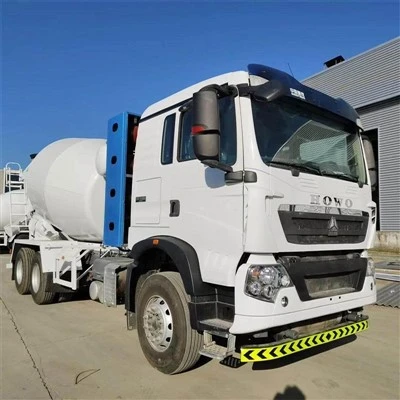
First off, let’s get one thing out of the way: people mix up cargo trucks and car haulers like they’re totally separate things, but that’s not the case at all. A lot of folks assume car haulers are this whole other specialized machine, but no – most standard cargo trucks can be adapted to haul vehicles, as long as you do it right. I’ve seen everything from a medium-duty 18-foot box truck with a ramp that we sold to a local independent mechanic, to a heavy-duty workhorse we rented out (wait, no, sold – yeah, sold) to a small auto transport company that uses it for 3-4 everyday cars around a city. The key here is matching the right cargo truck to the job, not forcing a square peg into a round hole.
Let’s break down the types of vehicles we’re talking about too, because that matters. If you’re moving a compact car, like a Honda Civic or a Toyota Corolla, or even a small SUV like a RAV4, that’s totally doable with a standard light-duty cargo truck (think class 3 or 4, 12,000 to 16,000 GVWR, for the newbies). Even a full-size sedan, like a Ford Taurus, fits on a lot of our 16-foot flatbed cargo trucks without any issues. The only time you start needing something bigger is if you’re hauling a heavy-duty truck, an RV, or a fancy sports car that’s low to the ground – but even then, we have heavy-duty cargo trucks built for that.
Wait, but hold on – some people say “wait, if it’s a car, why not use a regular car trailer?” And that’s fair, but car trailers have their own headaches. You need a separate tow vehicle, you have to back up the trailer which is a nightmare in tight city streets, and if you’re moving more than one car, you need a really long trailer. Cargo trucks? They’re one vehicle, no separate tow setup, you drive them like any other truck once you get used to the size. Our mechanic customer, Joe, he was hauling a broken-down van from a shop to a body shop last month, and he told me he saved like $150 that day because he didn’t have to rent a trailer and pay for that extra tow time. That’s the real win for small operators, not just big transport companies.
Now, the science and the practical stuff, because I know you don’t want to hear just hype – you want to know if it’s safe, right? Let’s talk weight first, because that’s the big safety factor. Every cargo truck has a Gross Vehicle Weight Rating (GVWR), which is the total weight it can carry including itself, fuel, driver, and whatever you’re hauling. A standard compact car is like 3,000 lbs, a midsize is 3,500, a full-size is 4,000 – so even a light-duty cargo truck with a 10,000 GVWR has 6,000 lbs of payload capacity after accounting for the truck itself, so you can easily haul one car, or even two smaller ones if you spread their weight out right. For heavier stuff, our class 7 cargo trucks go up to 33,000 GVWR, so you can haul a 10,000-lb semi or a full-size pickup no problem.
Then there’s securing the vehicle. This is where a lot of people mess up, and it’s not the truck’s fault – it’s how you use it. We sell every customer that buys a cargo truck for vehicle hauling a basic kit: heavy-duty wheel straps, corner anchors for the flatbed, and if they want, adjustable ramps that hook right into the truck’s frame. You don’t just tie the wheels to the bed and call it a day, by the way – you want to wrap straps around the wheel hubs, not just the rubber, and attach them to the truck’s D-rings or built-in anchors, not the side rails. I’ve seen a customer lose a entire Civic on the highway once because he used cheap rope instead of proper straps – never again, now we make sure everyone knows the basics before they take off.
Wait, also: can you put a car inside a box cargo truck? Oh, that’s another thing people ask all the time. Yeah, you can, if the box is tall enough and long enough. We have 20-foot box trucks that have 12-foot ceilings, so you can drive a car right inside, close the doors, and protect it from rain, dust, bird crap, even minor road debris. That’s a huge plus if you’re moving a car that’s not running, too – no need to worry about a flat tire or rust from the elements when it’s inside an enclosed space. The only catch is, you have to make sure the car fits – measure the length, width, height of the car before you buy the truck, because a lot of old box trucks are smaller than you think.
Now, who actually uses cargo trucks to move vehicles, beyond the random guy moving his own car? Let’s list the real customers we work with, so you get a sense of the demand. First, independent mechanics and small body shops – they need to move cars between their shop, parts suppliers, and the body shop, and they don’t want to pay for a dedicated car hauler every time. Then there’s auto dealerships, especially used car lots – a lot of our dealership clients use our cargo trucks to pick up trade-ins from private sellers or other dealerships, so they don’t have to pay a third-party transport company. We have a client in Arizona that uses three of our 24-foot cargo trucks to move pickup trucks between their lot in Phoenix and their new location in Tucson, saves them like $2,000 a month on transport fees. Then there’s people moving cross-country – not just families, but people who have a classic car they want to drive, or a truck they use for work, and they want to haul another vehicle without renting a big trailer. And don’t forget disaster relief teams – when there’s a hurricane or a tornado, emergency teams use cargo trucks to move damaged vehicles out of the way, and new ones or parts in, because they’re versatile and can go places big car haulers can’t.
Wait, but is there a downside? Let’s be honest, no one’s product is perfect. Cargo trucks for vehicle hauling aren’t ideal if you’re moving more than four cars at a time, right? Because even a big flatbed cargo truck can only fit so many. And if you’re hauling super fancy, high-end cars, like a $200k sports car, some people prefer a dedicated enclosed car hauler because it has extra cushioning and tie-downs designed specifically for that. But for 90% of the people moving vehicles – small businesses, private individuals, local operators – a cargo truck works just fine, and it’s way cheaper than getting a separate car hauler.
Another point: fuel efficiency? Let’s compare. A standard car hauler (the big, separate ones) get like 6-8 MPG on the highway, right? Our medium-duty cargo trucks get 10-12 MPG, that’s a big difference for someone who’s driving hundreds of miles a month. Heavy-duty ones get around 8-10, which is still better than a dedicated hauler. That adds up over time – if you’re driving 10,000 miles a year, that’s like $1,500 in fuel savings, easy.
Wait, I should mention something about modifications, too, because a lot of people ask if they need to modify their cargo truck to haul vehicles. The short answer is: usually not, if you pick the right one. A lot of our flatbed cargo trucks have pre-installed D-rings along the sides, adjustable stake pockets, so you can add ramps or extra tie-downs without doing major work. If you do need something specific, like higher load capacity, we can upfit the truck for you – that’s our thing, actually, we offer custom upfits for any job, not just moving vehicles, but if that’s what you need, we can do it.
Let me tell you a recent example to make this real. Last quarter, we sold a 16-foot flatbed cargo truck to a guy named Mike who starts a small business called “Local Auto Moves” – he moves cars for people around our city, no long hauls, just within 50 miles. He told me he looked at three dedicated car haulers, but they were all like $10k more expensive than our cargo truck. He added a set of adjustable ramps and heavy-duty straps for like $1,200 total, and now he’s moving 2-3 cars a day, paying $300 less a month in fuel than he would have with a dedicated hauler. He just texted me last week saying he’s ordering a second one, that’s how well it’s working.
Now, let’s get past the myths, because there are so many. Myth 1: Cargo trucks can only carry small loads. No, we have cargo trucks that can carry up to 20,000 lbs of payload, that’s more than enough for most vehicles. Myth 2: You need a special license to drive a cargo truck that hauls vehicles. That depends on the GVWR – if it’s under 26,000 lbs, you don’t need a CDL in most states, which is huge. A lot of our customers are small business owners who don’t want to spend money on a CDL training. Myth 3: Hauling a vehicle in a cargo truck is less safe than a trailer. If you do it right, it’s actually safer – you’re not dealing with a trailer that can sway, you’re driving a single vehicle, and if you have an accident, your car is right there with you instead of being a separate load that can come loose.
Wait, but what about road restrictions? A lot of people ask if cargo trucks can go the same places as regular cars. Yeah, mostly – as long as you stay under the height limit, which most cargo trucks are under 13 feet 6 inches, same as any other commercial truck. The only time you run into issues is if you’re going through really narrow backroads or old bridges, but that’s the same for any commercial vehicle, not specific to hauling cars.
So, putting it all together: can a cargo truck be used for transporting vehicles? Absolutely, and it’s not a hack job or a workaround – it’s a legitimate, cost-effective solution for everyone from small business owners to private individuals. The key is picking the right size truck for the job, using proper securing equipment, and following basic safety rules. We’ve sold hundreds of cargo trucks for vehicle hauling over the last few years, and almost all our customers are repeat buyers or refer us to other people in the auto business.
If you’re someone who’s thinking about moving more than just cargo – moving cars, pickup trucks, SUVs, whatever – and you’re tired of overpaying for dedicated car haulers, or dealing with the hassle of renting trailers, we can help. We have a range of cargo trucks from light-duty for personal use to heavy-duty for business, and we can upfit them exactly how you need for vehicle transport. If you want to chat through what size is right for your needs, how much it would cost, or anything else, hit us up to get the ball rolling on your next purchase.
Bulldozer References:
- National Highway Traffic Safety Administration. (2022). Commercial Vehicle Weight and Safety Guidelines for Light and Medium-Duty Trucks.
- American Trucking Associations. (2023). Market Trends in Specialty Vehicle Transport for Small and Medium-Sized Businesses.
- U.S. Department of Transportation. (2022). Statewide Commercial Driver’s License Requirements for Vehicles Under 26,000 GVWR.
Jining Dafu Machinery Sales Co., Ltd.
As one of the most professional cargo truck suppliers in China, we’re featured by quality products and low price. Please rest assured to wholesale bulk cheap cargo truck from our factory. We also accept customized orders.
Address: Room 1-115, Building 7, Luxinan Auto Parts City, Qiantongdian Village, Quanpu Town, Liangshan County, Jining City, Shandong Province
E-mail: jiningdafu@163.com
WebSite: https://www.dafumachinery.com/
