If you’ve ever stood in a grocery store staring at a shelf of roasted coffee bags, or reached for a sealed bag of protein powder on a gym shelf, chances are you’re holding a flat bottom bag. As a flat bottom bag supplier who’s been working in this space for over 12 years, I’ve lost count of how many times new clients walk into my workshop or send an email asking the same question: “What sizes do flat bottom bags even come in?” The answer isn’t a one-number-fits-all, and it’s not just random either—every size is tailored to what you’re packing, how you want it to display on shelves, and what your customers actually expect when they pick up your product. Over the years, I’ve worked with small-batch specialty roasters, large-scale snack distributors, and even pet food brands, and I can tell you that there’s a flat bottom bag size for nearly every product you can think of. Let me break this down, because it’s not just about length and width—it’s about purpose. Flat Bottom Bag
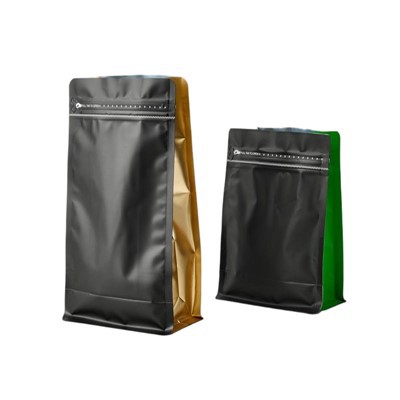
First, let’s start with the basics: what makes a flat bottom bag different from, say, a standard gusseted bag or a simple plastic pouch? Unlike those flimsier options, flat bottom bags have a rigid, folded base that lets them stand fully upright on their own without leaning on shelves or other bags. That design is why they’re so popular on retail floors, where shelf space is precious—they take up less room, display your product clearly, and give you more space for branding. But that standing feature only works if you get the size right; too small, and the bag will tip over; too large, and it looks empty or wastes product space.
When I first started out in this business, I thought sizes were just measured in fluid ounces or pounds, but I quickly learned that we size bags based on three core dimensions: length (the front-to-back measurement when the bag is standing), width (the side-to-side measurement, also called the gusset), and depth (how much the bag can hold when filled). Most clients come to me with a product in mind, and we start by matching the size to their specific volume. Let’s walk through the most common sizes I supply, grouped by industry, because that’s the easiest way to see how sizes translate to real-world products.
Starting with the smallest end of the spectrum, we have mini flat bottom bags, which usually hold between 1 ounce (28 grams) and 4 ounces (113 grams). When I say mini, I mean tiny—these bags are roughly 4 inches in length, 2 inches in width, and have a gusset of 1 to 2 inches. We make these for a few specific uses: sample sizes, specialty tea blends, or small-batch spices. A lot of small tea brands use these mini bags to offer sampler packs, and they’ve blown up lately because they’re perfect for grab-and-go purchases at farmers’ markets or boutique stores. Last year, I worked with a small craft hot sauce company that used mini flat bottom bags to package their mini hot sauce packets for wedding favors—they were easy to seal, looked polished, and fit perfectly in a small gift bag. The key here is that these mini sizes are intentional; they’re not scaled-down versions of larger bags, they’re built for single-serve or sample portions, so they’re designed to hold their shape even when they’re only a few inches tall.
Next, the mid-size range is where most of our clients fall, and it’s the sweet spot for everything from coffee to snacks. Mid-size flat bottom bags typically hold between 5 ounces (142 grams) and 2 pounds (907 grams), and their dimensions range from 6 to 10 inches in length, 3 to 5 inches in width, and have a gusset that extends from 2 to 4 inches. This is the size I supply most often, and for good reason. Specialized coffee roasters, for example, almost always use this size for their 12-ounce whole bean or ground coffee bags. A 12-ounce flat bottom bag in this mid-range is designed to stand tall on shelves, with enough space for a resealable zipper (super important for keeping coffee fresh), a degassing valve (that lets carbon dioxide escape without letting air in), and all the branding and product information customers want to read. I once had a client who switched from standard side-gusset bags to mid-size flat bottom bags for their coffee, and they told me their sales went up 18% because the bag looked more premium on the shelf and didn’t fall over mid-display. This size also works great for snack products: think trail mixes, granola bars, small bags of jerky, or even dog treats. If you’re selling a product that’s meant for one person to use over a week or two, mid-size is almost always the way to go.
Then we move into the larger end of the spectrum, for bulk products, pet food, or large-format snacks. These flat bottom bags hold between 2 pounds (907 grams) and 25 pounds (11.3 kilograms), and their dimensions are bigger too—length can be anywhere from 10 inches up to 20 inches, width from 5 inches to 10 inches, and gusset can go as wide as 8 inches. A lot of people don’t realize that flat bottom bags aren’t just for retail—they’re also used for bulk products sold at warehouse stores, or for pet food brands that sell 5-pound or 10-pound bags of dog or cat food. I worked with a large national pet food brand a few years back, and they switched from bulky plastic buckets to large flat bottom bags because the bags were easier to stack, took up less space in their warehouses, and were cheaper to ship. The flat bottom design here is a game-changer for bulk products too; when you have a 20-pound bag of pet food, you want it to sit flat on your pantry floor or on a store shelf without rolling, and that’s exactly what the large gusset and rigid base of a flat bottom bag do. We also make these large sizes with reinforced seams, because you’re packing a lot more weight, so the bags don’t split open during shipping or when a customer lifts them.
Wait, but there’s a middle ground I almost forgot about—we also have medium-large flat bottom bags that hold between 2 and 5 pounds, which are popular for things like bulk rice, flour, or artisanal pasta. These are a step up from the mid-size snack bags, but not as big as the bulk pet food bags, and they’re designed to be both retail-friendly and functional for home use. A lot of specialty flour brands use this size because it’s big enough to hold 5 pounds of flour, but small enough to display well on supermarket shelves, and the resealable zipper keeps the flour fresh after it’s opened. I’ve also had small bakeries use this size for custom flour blends, and they love that we can print their logo and recipe information right on the front of the bag.
But here’s the thing: size isn’t just about weight or volume. As a supplier, I always tell clients that the best size for you depends on three things: product type, shelf display, and customer needs. Let me explain that with an example. If you’re selling loose leaf tea, a 1-ounce mini bag might be perfect for samples, but if you’re selling a family-sized bag of tea to last a month, a 1-pound mid-size bag is better. If you’re selling coffee, the degassing valve is a non-negotiable, and you need to make sure the size of the bag doesn’t cramp the valve or the zipper. Another factor I consider is shelf space: if a store only has 6 inches of shelf width for your product, you can’t order a bag that’s 7 inches wide, no matter how much product it holds. I’ve had to turn away clients who tried to push a size that wasn’t going to fit their target shelf, because it would end up sitting in a back room instead of on the sales floor.
I also make custom sizes, by the way. Not every product fits into the standard ranges I mentioned. A few years back, I worked with a company that sold large, artisanal chocolate bars, and they needed a flat bottom bag that was tall enough to hold the 10-inch chocolate bars, but narrow enough to display them in a gift set. We created a custom size: 12 inches in length, 2.5 inches in width, with a 1.5-inch gusset, and it worked perfectly. It stood tall on the store shelf, displayed the chocolate clearly, and was easy to seal with a heat seal or a sticker. Another custom order came from a popcorn brand that made extra-large gourmet popcorn tins, but they wanted a flat bottom bag that could hold the same amount of popcorn as the tin, but was cheaper to ship. We made a 15-inch length, 8-inch width, 6-inch gusset bag that held 3 pounds of popcorn, and the brand saved 20% on shipping because the bags were flexible and took up less space when empty.
One mistake I see new brands make all the time is ordering a bag that’s too big, thinking it gives them more room for branding or product. But a bag that’s too large for your product will look half-empty on the shelf, which makes customers think you’re not giving them enough value. I had a small granola company come to me last year—they were selling 1-pound bags of granola, and they’d ordered 1.5-pound bags because they thought it would make their branding look better. When they brought the bags to me, the granola only filled about two-thirds of the bag, and they said customers were commenting that it looked like they were getting less than they paid for. We ended up reworking the size to a 1-pound exact fit, and their sales picked up immediately. The same goes for bags that are too small: if you cram too much product into a bag that’s too narrow, the seams will split, or the bag won’t stand up, and that leads to returns and bad reviews.
Another important point about sizes: when you’re dealing with flat bottom bags, the gusset depth is what determines how much the bag can hold, not just the length and width. A lot of people mix up gusset size with overall size, but the gusset is the side fold that allows the bag to expand when filled. For example, two bags can have the same length and width, but different gusset sizes, so one holds 1 pound and the other holds 3 pounds. That’s why when you’re sizing a bag for a specific product, I always ask for the exact dimensions of the product itself, not just the weight. If you’re packing coffee beans, which are loosely packed, they’ll take up more space than ground coffee, so you need a slightly larger gusset than you would for ground coffee. If you’re packing a dense product like protein powder, it will take up less space, so you can use a smaller gusset for the same weight.
I’ve also noticed that over the last five years, there’s been a trend towards more sizes that are focused on convenience. Single-serve flat bottom bags have gotten way more popular—think 2-ounce bags of nuts, 3-ounce bags of dried fruit, or 4-ounce bags of trail mix. These are perfect for vending machines, office pantries, or on-the-go snacks, and they fit into the mid-size range I mentioned earlier, but they’re smaller than the family-sized bags. A lot of my clients in the snack space are moving away from larger bulk bags towards these convenient single-serve sizes, because they sell better in impulse buys.
For brands that are just starting out, I always recommend testing a few sizes before committing to a large order. Flat bottom bags can be custom printed, so you can order a small run of different sizes to see which one performs best. I offer small minimum orders for new clients, because I know it’s risky to order 10,000 bags without knowing if the size will work. For example, a new specialty tea brand might test the 1-ounce mini size for samples, the 4-ounce size for their regular tea, and the 1-pound size for their bulk bag, and then scale up the size that sells the most.
Now, if you’re wondering about the technical side of sizing, let’s get a little more specific. The standard sizes I keep in stock (for quick orders) are:
- 1 oz: 4” L x 2” W x 1.5” gusset
- 4 oz: 5” L x 3” W x 2” gusset
- 12 oz: 7” L x 4” W x 3” gusset (the most popular coffee bag size)
- 1 lb: 8” L x 4.5” W x 3.5” gusset
- 2 lb: 9” L x 5” W x 4” gusset
- 5 lb: 12” L x 6” W x 5” gusset
- 10 lb: 15” L x 7” W x 6” gusset
These are the go-to sizes that work for most products, but as I said, custom sizes are always an option. I also make sure that every size I supply is compatible with common features that clients want: resealable zippers, degassing valves, window cuts (so customers can see the product inside), and custom printing. A common question I get is whether the size affects the cost of the bag, and the short answer is yes—larger sizes cost more because they use more material, and custom sizes might have a small extra fee if they fall outside of the standard ranges. But for most brands, the extra cost is worth it, because a well-sized bag will boost sales and reduce returns.
As a flat bottom bag supplier, my goal isn’t just to sell you a bag—it’s to help you pick a size that works for your product, your brand, and your customers. I’ve worked with hundreds of brands, from startup roasters to Fortune 500 companies, and the one thing all successful brands have in common is that they put as much thought into their packaging size as they do into their product. The flat bottom bag’s biggest advantage is that it’s versatile, but that versatility only works if you get the size right. Whether you’re selling a single-serve snack, a bag of coffee, or a 20-pound bag of pet food, there’s a flat bottom bag size that’s perfect for you.

If you’re a brand owner looking to switch to flat bottom bags, or you’re just ready to find the right size for your next product launch, I’d love to help. We offer custom sizing, small minimum orders, and competitive pricing for all types of flat bottom bags. Reach out to my team to discuss your needs, and we can work together to create a bag that stands out on shelves and keeps your product fresh.
Stand Up Pouch References:
- Packaging Association, “Retail Packaging Trends 2024,” 2024
- Specialty Coffee Association, “Packaging Guidelines for Fresh Roasted Coffee,” 2023
- Snack and Food Packaging Magazine, “Flat Bottom Bag Performance by Size and Industry,” 2022
- Pet Food Manufacturers Association, “Bulk Packaging Solutions for Pet Food,” 2023
Shenzhen Hongbang Packaging Production Co., Ltd.
We are one of the most experienced flat bottom bag manufacturers and suppliers in China, specialized in providing high quality custom service. Please feel free to buy bulk flat bottom bag made in China here from our factory. For quotation and free sample, contact us now.
Address: Room 601, BLDG D, Wisdom Centre, No. 58 Nanlian Road, Longgang, Shenzhen China 518116
E-mail: pm@hongbangpack.com
WebSite: https://www.hongbangpack.com/
