Hey everyone, it’s Jake from the FIBC team here—you know, the guy who gets 3 a.m. Slack messages about “will this bag hold our 100-micron powdered resin” or “is Type A safe for our specialty food powder?” Today we’re tackling one of the most common questions I get in my DMs and quick calls: Can Type A FIBC bags actually be used for packing powders? Let’s cut through the jargon, skip the textbook stuff, and get real about what this means for your powder operations. Type A Fibc Bags
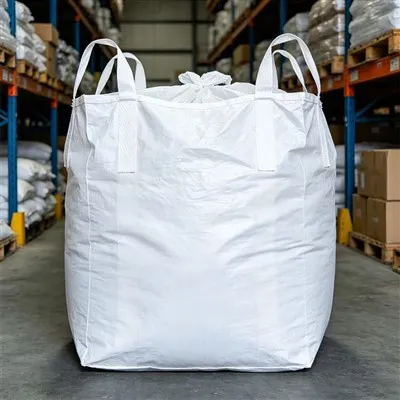
First off, let’s ground this in what Type A FIBC bags actually are, because half the confusion here comes from mixing up bag types. FIBC stands for Flexible Intermediate Bulk Container—those big 1-ton (or whatever) bulk bags you see in warehouses and loading docks. Type A is the basic, unextruded, plain-woven polypropylene (PP) FIBC. No antistatic coating, no conductive threads, just plain woven PP fabric that’s lightweight, flexible, and cheap compared to other types. That’s the key point people miss right off the bat: Type A is not inherently antistatic. At all. It’s just regular PP woven material.
Now, powders—we’re talking about everything from food-grade flour, milk powder, and cocoa to industrial stuff like resin powder, pigment powder, fertilizer powder, even pharmaceutical excipients. Powders have one big variable that dictates bag choice: their electrostatic charge. If you’ve ever gotten a static shock touching a doorknob after walking across carpet, that’s the same energy at play here. When powder rubs against the bag fabric, or even against itself during loading/unloading, it generates static electricity. That’s where Type A’s reputation gets tricky.
Here’s the big myth I want to bust first: A lot of people think “Type A can’t hold powders” full stop. No, that’s not true. It’s all about the powder’s properties, and the environment you’re using the bags in. Let’s break that down. For example, I recently worked with a small specialty bakery that needed to pack 500kg batches of organic wheat flour. Flour is a non-conductive powder, but it’s not super fine, and the bakery was loading it in a well-ventilated, low-humidity space (humidity actually cuts down static because water molecules conduct charge). They used our standard Type A woven FIBCs with a liner to keep the flour pure, and they haven’t had a single static issue in 8 months. Wait, why? Because the flour’s static generation was low enough, and their facility controls kept it from building up to dangerous levels.
But then there’s the other side. Let’s take pigment powder—super fine, extremely abrasive, and it generates a ton of static when it flows. Or resin powder used in injection molding, which is also highly charged. Or even pharmaceutical powders that need to be packed for transport across the country, where humidity drops and static can spike. For those, Type A is a no-go. Why? Because Type A doesn’t dissipate static. If the powder’s static charge builds up to the point of a discharge, that discharge can ignite flammable powders. A lot of these powders have low minimum ignition energy (MIE)—like, some pigment powders have an MIE of less than 1 millijoule, which is way less than the spark you get from rubbing a balloon on your hair. That’s a fire or explosion risk, full stop, and Type A doesn’t prevent that.
Wait, but hold on—what if you add a liner to a Type A bag? A lot of customers ask that. I get it, liners are a big add. But most standard PE liners don’t conduct static either. If anything, they can trap static between the liner and the bag, making the problem worse. There’s a thing called liner rubbing—when the powder slides against the liner, it generates even more static that can’t escape. I had a client last year who tried using a Type A bag with a standard liner for their activated carbon powder, thinking it would fix the static. They got lucky—no explosion, but they had a big issue with powder sticking to the liner because of static, so half the batch wouldn’t discharge when they unloaded. They switched to Type C FIBCs the next week, and the problem was gone.
Another big point: regulatory stuff, especially for food and pharma. A lot of food-grade powders require bags that meet specific USDA or FDA standards. Type A bags can be made food-safe, right? We make our Type A bags with food-grade PP, no heavy metals, so they meet the standards. But the static risk is still a problem even if it’s food-safe. If your powder is food-grade and flammable, you still need a bag that controls static, not just one that’s food-safe. I see this all the time—customers mix up material compliance with safety compliance. They’ll order Type A because it’s food-safe, not realize their powder’s flammable, until we flag it. That’s why we’re always upfront about this, even if it means losing a sale sometimes.
Now, when is Type A actually the perfect call for packing powders? Let’s outline the scenarios, because this is where it gets practical for you, the buyer or warehouse manager. First, non-flammable, low-static powders. Think: wheat flour, sugar, some types of fertilizer that aren’t reactive, agricultural lime, even some plastic pellets (wait, pellets are different, but fine powder versions—if they don’t spark). Second, low-risk environments. No enclosed spaces, good ventilation, controlled humidity (over 40% is usually enough to cut static), and loading processes that don’t involve dumping powder from a height (high drops generate more friction, more static). Third, cost. Type A is way cheaper than Type C or Type D FIBCs, so if you don’t need the static protection, it’s a no-brainer for your bottom line. We have a lot of small manufacturers and local distributors that stick with Type A for these exact reasons.
Wait, but what if you have a powder that’s in that gray area? Like, something that’s moderately charged, not super flammable, but you want to play it safe? We sometimes work with customers on modified Type A bags. Not the basic kind—we can treat the PP fabric with a low-grade antistatic coating that dissipates small amounts of static, without jumping up to the cost of a full Type C (which has conductive threads woven in the fabric). It’s a middle ground, perfect for powders that generate a little static but not enough to be explosive. Last year we did this for a company packing laundry detergent powder, which is moderately charged. They saved 20% compared to Type C, and haven’t had any issues with static discharge or stuck powder. That’s a big win for both sides.
I should also address a common misconception about Type A and bulk density. Some people think Type A can only handle light powders, but that’s not true either. Our Type A bags are rated for 1000kg, same as other types, as long as you get the right fabric weight (usually 140g/m² or 160g/m² for powders, depending on density). I’ve had a customer pack 950kg of corn starch in a Type A bag, no issues—starch is a powder that’s not extremely flammable, and their loading process was slow and well-ventilated. The key isn’t the bag type, it’s matching the bag to your specific powder and process.
Let’s talk about mistakes we see customers make all the time, because I want you to avoid these. First, assuming Type A is “bad” for all powders. It’s not—it’s just not right for flammable, high-static powders. Second, assuming that adding a liner fixes the static problem. As I mentioned earlier, most liners don’t conduct charge, so they often make it worse. Third, ignoring environmental factors. If you’re operating in a dry climate, like Arizona or parts of Europe in winter, humidity is way lower, so static is way more of an issue. Even if your powder’s normally low-static, dry conditions can spike it, making Type A unsafe. Fourth, not testing. If you’re unsure, order a small batch of Type A bags, test them with your powder in your actual facility for a week before going all in. We offer free sample bags, by the way—no catch, just send us your powder specs, and we’ll send you 2-3 test bags. That’s a no-brainer, right?
Wait, I should also mention Type D bags just briefly, because some people confuse them with Type A. Type D is another antistatic type, but it’s for environments with extremely high risk, like dust explosions in grain elevators or coal facilities. But Type A is still a solid choice for low-risk applications, so long as you do your due diligence.
Let me wrap this up with a quick real example that stuck with me. A few months back, I got an email from a guy named Mike who runs a craft spice company. He was using Type A bags to pack his chili powder, and he was having small sparks when he opened the bags after loading. He thought Type A was garbage, wanted to switch to a more expensive bag, and was ready to cancel his order. I hopped on a quick call with him, asked him a few questions: what’s the humidity in his warehouse? 32%, dry, it’s winter in Colorado. Is chili powder flammable? Yes, way more than flour. How was he loading it? He was dumping it from a conveyor 10 feet high, no slow fill. So I didn’t say “Type A is bad”—I said “here’s the fix.” We sold him a small batch of Type C bags, and a tip: slow down the loading to 5 feet, not 10. He emailed me two weeks later saying no more sparks, no stuck powder, and the cost was way less than he thought. That’s the kind of problem-solving I do here, not just selling bags.
So to answer the original question: Yes, Type A FIBC bags can be used for packing powders—but only if you match the bag to your powder type, your facility environment, and your loading process. It’s not a yes/no answer, it’s a conditional one. If you’re dealing with low-static, non-flammable powders in a well-ventilated, moderate-humidity space, Type A is perfect—cheap, flexible, works great. If you’re packing highly charged, flammable powders, or operating in dry, enclosed spaces, Type A is a safety risk, and you need to go with a static-dissipative bag like Type C.
If you’re not sure which bag you need, just reach out. We don’t pressure you to buy the most expensive bag. We’ll ask you a few quick questions: what powder are you packing? What’s its density? What’s your facility’s humidity level? How do you load and unload? And we’ll give you an honest answer—whether that’s Type A, a modified Type A, Type C, or even another type entirely. We’re here to help, not make a quick sale.
Ready to chat through your powder packing needs? Reach out to us anytime. We’ve got samples, we’ve got real-world experience, and we’ll give you straight answers, no fluff.
PE Tarpaulin References:
- European Committee for Standardization. (2018). FIBCs for General Purpose, Type A: Specifications and Test Methods. EN 13552:2018.
- Occupational Safety and Health Administration (OSHA). (2021). Static Electricity Hazards in Bulk Material Handling. OSHA 3681-06R-2021.
- American Society for Testing and Materials (ASTM). (2020). Standard Practice for Static Control in FIBCs for Powder Packaging. ASTM D6198-20.
- Food and Drug Administration (FDA). (2019). Grade Requirements for Food-Contact Flexible Packaging Materials. FDA 21 CFR Part 177.
Liaoning Xunlian Packaging Products Co., Ltd.
Liaoning Xunlian Packaging Products Co., Ltd. is one of the most professional type a fibc bags manufacturers and suppliers in China, featured by quality products and good service. Welcome to wholesale CE approved type a fibc bags made in China here and get quotation from our factory. Customized orders are welcome.
Address: Chaoyang Industrial Park, Kangping, Shenyang, Liaoning, China.
E-mail: info@xunlianpack.com
WebSite: https://www.xunlianpack.com/
