Spiral springs, also known as power springs or clock springs, have long been an integral part of various mechanical systems. As a dedicated spiral spring supplier, I’ve witnessed firsthand the diverse applications and unique demands of these springs. One of the most challenging and fascinating arenas where spiral springs are used is the aerospace field. In this blog, I’ll delve into the special requirements that spiral springs need to meet in the aerospace industry. Spiral Spring
Extreme Temperature Resistance
The aerospace environment exposes components to a wide range of temperatures. During space missions, spacecraft can experience extreme cold in the shadow of celestial bodies and intense heat when exposed directly to the sun. For example, the temperature on the moon can vary from -173°C at night to 127°C during the day. Even within the Earth’s atmosphere, aircraft engines can generate extremely high temperatures, while the outer surfaces of planes flying at high altitudes can be exposed to very cold conditions.
Spiral springs used in aerospace applications must be able to maintain their mechanical properties across these extreme temperature ranges. Materials with high thermal stability are crucial. For instance, certain nickel – based alloys are well – suited for this purpose. These alloys can resist the effects of thermal expansion and contraction, ensuring that the spring’s performance remains consistent. A spring that loses its elasticity due to temperature changes can lead to malfunctions in critical aerospace systems, such as the deployment mechanisms of solar panels or the actuation of control surfaces on an aircraft.
High Strength – to – Weight Ratio
In aerospace, every gram matters. The weight of an aircraft or spacecraft directly impacts its fuel efficiency, payload capacity, and overall performance. Spiral springs need to provide the necessary force while being as lightweight as possible. This requires the use of advanced materials and precise manufacturing techniques.
Titanium alloys are often used in aerospace spiral springs because they offer an excellent strength – to – weight ratio. They can withstand high stresses and loads without adding excessive weight. Additionally, the design of the spiral spring itself can be optimized to reduce weight without sacrificing performance. For example, using thinner but stronger materials and carefully calculating the number of coils and the pitch of the spring can result in a lightweight yet effective design. A lighter spring means that more payload can be carried or less fuel is consumed during a flight, which is a significant advantage in the aerospace industry.
Corrosion Resistance
The aerospace environment is not only harsh in terms of temperature but also in terms of corrosion. The presence of oxygen, moisture, and various chemicals can cause corrosion of metal components over time. For aircraft flying over the ocean, the saltwater in the air can be particularly corrosive. In space, the presence of atomic oxygen can also cause surface erosion of materials.
Spiral springs in aerospace applications must have excellent corrosion resistance. Special coatings can be applied to the springs to protect them from the corrosive environment. For example, a thin layer of chromium or zinc can be electroplated onto the surface of the spring to act as a barrier against oxidation and other forms of corrosion. Stainless steel is also a popular material choice for its inherent corrosion – resistant properties. Ensuring that the spring remains free from corrosion is essential for its long – term reliability and functionality in aerospace systems.
High Precision and Consistency
Aerospace systems demand a high level of precision. Spiral springs need to provide accurate and consistent force output. Even a small variation in the spring’s performance can have significant consequences for the operation of aerospace equipment.
During the manufacturing process, strict quality control measures are implemented to ensure that each spring meets the specified design parameters. Advanced manufacturing techniques, such as computer – controlled machining and precision stamping, are used to produce springs with high dimensional accuracy. For example, the pitch of the spiral spring must be precisely controlled to ensure that the spring’s force characteristics are consistent. In addition, extensive testing is carried out on each spring to verify its performance. This includes tests for force output, fatigue life, and dimensional accuracy. Only springs that meet the strict quality standards are approved for use in aerospace applications.
Fatigue Resistance
Aerospace components are often subjected to repeated loading and unloading cycles. Spiral springs in aircraft landing gear, for example, experience a large number of compression and expansion cycles during take – offs and landings. In space applications, springs used in deployment mechanisms may be required to operate multiple times over the course of a mission.
To withstand these cyclic loads without failure, spiral springs need to have high fatigue resistance. The choice of material is crucial in this regard. Materials with fine grain structures and high ductility are generally more resistant to fatigue. Additionally, the surface treatment of the spring can also improve its fatigue life. For example, shot peening can be used to introduce compressive stresses on the surface of the spring, which helps to prevent the initiation and propagation of cracks. By ensuring high fatigue resistance, the reliability and safety of aerospace systems can be significantly enhanced.
Compatibility with Other Materials and Systems
Spiral springs in aerospace applications do not work in isolation. They are often part of a larger system that includes other components made of different materials. Therefore, the springs need to be compatible with these other materials to avoid issues such as galvanic corrosion or mechanical interference.
When designing and manufacturing spiral springs, it is necessary to consider the materials of the adjacent components. For example, if a spring is to be used in a system with aluminum parts, the choice of spring material should be such that it does not cause galvanic corrosion when in contact with aluminum. In addition, the spring’s dimensions and shape must be designed to fit seamlessly into the overall system. This requires close collaboration between the spring supplier and the aerospace engineers to ensure that the spring meets all the requirements of the specific application.
Conclusion

In the aerospace field, spiral springs play a vital role in a wide range of applications. Meeting the special requirements of this industry is a challenging but rewarding task. As a spiral spring supplier, we are committed to providing high – quality springs that meet the strict standards of the aerospace industry. Our team of experts uses the latest technologies and manufacturing processes to ensure that our springs offer extreme temperature resistance, high strength – to – weight ratio, corrosion resistance, high precision and consistency, fatigue resistance, and compatibility with other materials and systems.
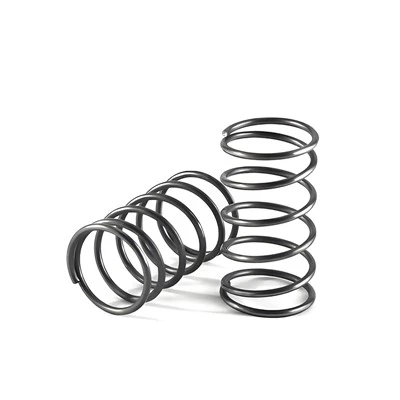
Compression Spring If you are involved in the aerospace industry and are in need of high – performance spiral springs, we would be delighted to discuss your specific requirements. Our experience and expertise in spring manufacturing make us a reliable partner for your aerospace projects. We look forward to the opportunity to work with you and contribute to the success of your aerospace applications.
References
- "Materials Science and Engineering: An Introduction" by William D. Callister Jr. and David G. Rethwisch.
- "Aerospace Engineering: A Design – Centric Approach" by James F. Marchman IV.
- Research papers on aerospace materials and components in scientific journals such as "Journal of Aerospace Engineering" and "Materials Science and Engineering A".
Shengzhou Deyuxiang Hardware Accessories Co., Ltd.
We are one of the most professional spiral spring manufacturers and suppliers in China, also support customized service. With abundant experience, we warmly welcome you to buy high quality spiral spring made in China here and get pricelist from our factory. For price consultation, contact us.
Address: No. 38, Caosheng Road, Caoqiao Street, Pinghu City, Jiaxing City, Zhejiang Province
E-mail: 877286126@qq.com
WebSite: https://www.dyx-spring.com/
