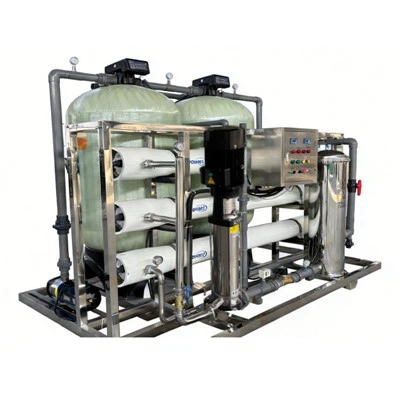
If you’ve worked in industrial water treatment for even a few years, you know that reverse osmosis (RO) isn’t just a set of fancy membranes and high-pressure pumps. It’s a system that lives or dies by what happens before the water even hits those membranes. I’ve seen so many clients install top-tier RO units, pour money into setup, and then watch production plummet within six months because they skipped proper pre-treatment. As someone who’s been an industrial RO equipment supplier for over a decade—walking factories through their daily water challenges, troubleshooting breakdowns at 2 a.m., and refining our pre-treatment recommendations to fit real-world plant floors—I can tell you: optimizing pre-treatment isn’t just a “nice-to-have” for extending RO life. It’s the backbone of reliable, cost-effective RO operation. Industrial RO Equipment
Let me start with a story that’s stuck with me from 2018. A food and beverage client in the Midwest reached out after their $2M RO line failed three months in. Their membranes were clogged so bad we had to replace the entire set—something that’s supposed to last 3–5 years. When I walked their plant, I noticed they’d installed a single cartridge filter on the inlet to the RO skid and called it pre-treatment. No pH adjustment, no anti-scalant, no proper filtration for suspended solids or organic matter. That’s a common mistake, but it’s one that costs thousands in downtime and replacement parts. Today, that same client’s pre-treatment system is calibrated to their source water, their membranes are going strong, and their production never slows. That’s the difference between reactive fixes and proactive pre-treatment optimization.
First, you have to ground every pre-treatment decision in your source water. There’s no one-size-fits-all setup, and I say that as someone who’s seen nearly every type of industrial feed water: well water with high iron and manganese, surface water rife with algae and organic debris, municipal water with residual chlorine and chloramine, and even treated wastewater for reuse. For example, a semiconductor factory’s water is ultra-pure, so their pre-treatment has to remove even trace metals that don’t bother a textile plant. That’s why the first step to optimizing pre-treatment is a comprehensive, on-site water quality analysis—not just a lab test of a grab sample, but monitoring over 7–10 days to account for diurnal swings, seasonal changes, and even weather events that alter source water composition. I always bring a portable meter when I visit a new client to measure pH, turbidity, iron, manganese, and residual chlorine on the spot, then pair that with a 72-hour composite sample sent to our accredited lab. The data here isn’t just numbers; it’s the blueprint for your pre-treatment system.
Next, let’s talk about suspended solids filtration—the first line of defense. Most plants use cartridge filters, but not all cartridge filters are created equal. I’ve seen clients cut costs by buying generic 5-micron filters, only to replace them every 3 days, driving up labor and filter costs. The sweet spot here is matching filter size and type to your specific solids load. For high-turbidity surface water, we recommend graded-density depth filters (instead of pleated cartridge filters) because they can hold more solids before clogging, reducing changeouts by 50% or more. For fine, colloidal solids common in well water, a 1–2 micron pleated filter with a high dirt-holding capacity is better than a bulk depth filter. The mistake many make is skipping this step entirely, or using a filter that’s too large, allowing fine solids to pass through and embed in RO membrane pores. Once solids are in the membrane, even the most powerful chemical cleaning can’t fully remove them, cutting membrane lifespan by half.
Then there’s the big one: scaling and biofouling prevention. Scaling happens when minerals like calcium carbonate, calcium sulfate, or barium sulfate precipitate out of water as pressure increases and water is concentrated through the RO membrane. Biofouling is when bacteria, algae, and other microbes grow on membrane surfaces, forming a slimy layer that blocks flow. These two issues are responsible for 70% of RO downtime and membrane failures, per data we’ve collected from our 200+ client accounts over the last five years. To optimize pre-treatment for these, two core steps are non-negotiable: pH adjustment and targeted chemical dosing. pH adjustment: for most water, calcium carbonate scale forms when pH rises above 8.0, so we lower feed water pH to 6.5–7.2 with sulfuric or hydrochloric acid to prevent that. But for clients with high silica levels, we avoid acid because it doesn’t prevent silica scaling—instead, we adjust with sodium hydroxide to raise pH, which keeps silica dissolved longer. Then there’s anti-scalant selection: not all anti-scalants work the same. Generic anti-scalants work for low-scale potential water, but for high-scale water (like hard well water), we use custom-formulated anti-scalants that target the specific minerals present. A common mistake here is under-dosing anti-scalant to cut costs, which leads to scaling within months. On the flip side, over-dosing can leave residues that damage membranes, so we calibrate dosing pumps to real-time water conditions, not just static schedules. For biofouling, we also recommend a biocide step—either continuous low-dose chloramine, or periodic shock dosing with chlorine, followed by a dechlorination step (like activated carbon or sodium bisulfite) to make sure residual chlorine doesn’t oxidize RO membranes. I can’t stress that last part enough: chlorine will eat through most polyamide RO membranes in days, so dechlorination is non-negotiable, no exceptions.
Another often-overlooked pre-treatment component is the softening step. For water with high hardness (over 100 ppm as CaCO3), softening (ion exchange) removes calcium and magnesium before they can form scale in the RO. But here’s a trick I’ve learned over the years: don’t over-size your softener just to avoid resin replacement. Instead, use a demand-based regeneration system that only regenerates the softener resin when the hardness reaches a set point, not on a fixed schedule. This cuts chemical (salt) usage by 30–40%, which is a huge win for both cost and sustainability. For clients with very high hardness or those that can’t use salt (like food and beverage facilities), we recommend a membrane softener—nanofiltration membranes that remove hardness without the need for ion exchange resin. It’s a more modern solution, but it’s become our go-to for clients looking to reduce chemical waste.
Even with all these steps, pre-treatment optimization isn’t a “set-it-and-forget-it” task. A lot of plants install a pre-treatment system, then ignore it for years, assuming it’s working. But water changes—seasonal rains, new suppliers, even changes to the plant’s own operations—alter source water composition, so pre-treatment needs to be monitored and adjusted regularly. We recommend monthly testing of pre-treatment performance: checking filter pressure differentials to see if filters are clogging prematurely, testing feed water pH and mineral levels, and monitoring residual anti-scalant and biocide levels. Quarterly, we do a full system audit, inspecting for leaks, calibrating dosing pumps, and checking activated carbon beds for exhaustion. I once had a client who thought their pre-treatment was fine, but during an audit, we found their carbon bed was exhausted, so chlorine was seeping through to the RO membranes, causing gradual, permanent damage. They’d been paying for membrane replacement for two years without realizing the root cause was a $200 carbon bed change. That’s the kind of costly mistake you avoid with regular monitoring.
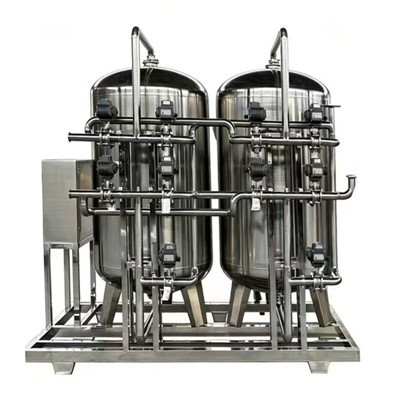
Now, let’s talk about common pitfalls that even experienced plant managers fall into. One is mixing pre-treatment chemicals. For example, never mix acid and anti-scalant in the same line before the RO feed—some anti-scalants react with acid to form insoluble compounds that clog filters. Another is ignoring backwash for depth filters and softeners. Depth filters need regular backwashing to remove trapped solids, and if backwash flow is too low, solids build up, reducing filter capacity. If it’s too high, you waste water and force fine solids through. We work with clients to automate backwash cycles based on pressure differentials, so they don’t have to adjust manually. And for softeners, if backwash isn’t done properly, resin beads clump together, reducing efficiency and requiring more frequent regeneration.
Sustainability is another big piece of optimizing pre-treatment these days. Clients don’t just care about RO performance—they care about reducing water waste, chemical usage, and energy costs. Our optimized pre-treatment systems cut RO water waste by up to 20% in many cases, because better pre-treatment means less membrane fouling, so the RO can operate at higher recovery rates (the percentage of water that passes through the membrane, instead of being sent to drain). For example, a textile client we worked with was running their RO at 50% recovery due to constant scaling, but after optimizing their pre-treatment (custom anti-scalant, pH adjustment, and a demand-based softener), they now run at 65% recovery, cutting water and energy costs by $120k a year. That’s the kind of ROI that makes pre-treatment optimization worth every dollar invested.
Let me circle back to that 2018 Midwest food and beverage client. Last month, I visited their plant again for a routine audit. Their RO line has been running for six years, no membrane replacements, less downtime, and a 15% lower annual operating cost than when we first worked together. They told me that early mistake—skipping proper pre-treatment—cost them $80k in replacement membranes alone, but fixing their pre-treatment has saved them over $500k in three years. That’s the story that keeps me going as an industrial RO equipment supplier: helping clients turn pre-treatment from a afterthought into their most reliable tool for RO performance.
If you’re dealing with frequent RO downtime, high membrane replacement costs, or inconsistent water quality, you don’t have to figure this out alone. Our team has worked with factories across every industry—food and beverage, pharmaceuticals, semiconductors, power generation, and more—to design, install, and optimize pre-treatment systems tailored to your exact source water and operational needs. We don’t sell one-size-fits-all skids; we bring data, on-site analysis, and decades of field experience to make sure your pre-treatment works as hard as your RO line. To start a conversation about optimizing your industrial RO pre-treatment process, get in touch with our team to discuss your specific challenges and goals.
Reverse Osmosis Water System References
- AWWA. (2020). Reverse Osmosis and Nanofiltration: Technology and Applications. American Water Works Association.
- State Water Resources Control Board. (2021). Industrial Pre-Treatment Guidelines for Reverse Osmosis Systems. California Environmental Protection Agency.
- Miller, J. E. (2019). Operational Efficiency of Industrial RO Systems: Pre-Treatment Strategies and Performance Metrics. Journal of Water Process Engineering, 30, 100892.
- Dupont Water Solutions. (2022). Membrane Fouling in Reverse Osmosis: Root Causes and Mitigation. Technical Bulletin TB-RO-007.
- World Health Organization. (2020). Guidelines for the Safe Use of Wastewater, Excreta and Greywater Volume 4: Wastewater Use in Non-Food Crops. WHO Press.
Shandong Yanuo Environmental Protection Equipment Co., Ltd.
We’re well-known as one of the leading industrial ro equipment manufacturers and suppliers in China, featured by quality products and good price. Please rest assured to buy bulk industrial ro equipment made in China here from our factory. Customized orders are welcome.
Address: North Side of the Road, 1,000 Meters West of the Intersection of Fenghuangshan West Road and Provincial Highway S102, Wangfu Subdistrict, Qingzhou City, Weifang City, Shandong Province.
E-mail: ynhb.499973983@gmail.com
WebSite: https://www.zkyaruo.com/
