Hey there, quick question—when you’re shopping around for a solar energy storage system, have you ever stopped to think about how fast it actually kicks in when you need it? Like, if the grid cuts out during a summer heatwave or a sudden thunderstorm knocks out power, that split second of waiting can feel like forever. As someone who’s been in the solar storage game for years (I run the side of our team that answers every customer’s “wait, what?” questions), I get this is probably the last thing on your mind when you’re picking panels or choosing a battery size—but it’s one of the most important specs that actually makes your system worth investing in. Today, let’s break down what “response time” even means for a solar storage setup, why it’s not a one-size-fits-all number, and what that number looks like for our systems specifically. Solar Energy Storage System
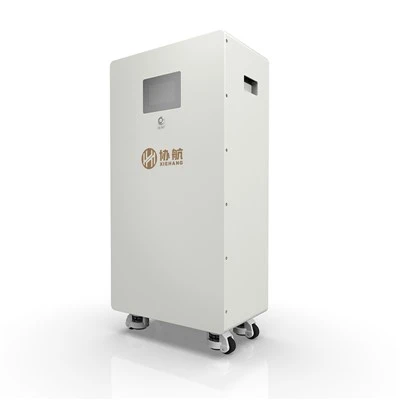
First off, let’s get on the same page: response time here isn’t how long it takes the sun to charge your battery. That’s a whole other thing (hint: it depends on how strong the sun is, how big your panels are, and whether you’re running the AC while charging). No, we’re talking about the time between when something triggers a power shift—grid outage, a solar cloud covering your panels, you flipping a critical load like your fridge or well pump—and when your storage system starts delivering power to cover that gap. Think of it like when you’re driving and you let go of the gas; how fast does the brake engage to slow you down? That’s the same vibe, just for electricity.
Now, let’s get into the real numbers, because that’s what actually matters. For most standard residential solar storage systems (the ones we sell most of, for homes of 2-5 people), the response time is measured in milliseconds. Wait, milliseconds? That’s 1/1000 of a second. To put that in perspective, a blink of an eye is about 100 milliseconds—so our systems kick in 100x faster than you can even blink. For grid-connected systems, when the grid is up and running, your storage is just charging off excess solar or utility power, waiting in the wings. If the grid drops, the “transfer switch” (the part that connects your battery to your home’s circuits) triggers that switch. For our systems, that switch action is 2 milliseconds max. That’s so fast, you won’t even notice the power dip—your smart TV won’t restart, your security camera won’t glitch, your sump pump won’t hesitate.
But hold on, that’s not the end of the story. Not all situations have the same response needs. Let’s split this into two main scenarios: grid outages and grid-tied (on-grid) operation hiccups. For a grid outage—aka a blackout—we test our systems to hit that full response time in under 5 milliseconds, every single time. Why the small buffer? Because sometimes there’s a tiny delay in the sensor that detects the grid is down, but once that sensor picks up the blip, the battery is already primed to send power. For larger systems, like commercial setups for cafes or small offices, the response is still super fast—maybe a tick longer, like 10 milliseconds, but that’s because those systems have to handle more power to keep a walk-in fridge or POS system running. And for off-grid systems, which are set up to never connect to the grid at all, the response time is even less of a worry because you’re already relying on the battery for everything from day one—no gap to fill there.
Wait, but what about when the sun hides behind a cloud for 10 minutes, and your solar panels suddenly drop their power output? Does the storage system respond then? That’s a great question, and it’s different from an outage. For that, we call it “ramp rate,” which is how fast the battery adjusts its power output to make up for the solar dip. That’s usually in seconds, not milliseconds—like 2 to 10 seconds. Still way faster than a human can react, but it’s a different metric. If you’re running your AC and the solar drops, the battery will ramp up to cover that load so the AC doesn’t shut off. That’s important for people who want zero disruption to their daily lives, even when the weather is wonky.
Let me be real with you: a lot of storage companies will hype up “ultra-fast response times” but don’t explain what that actually means, or test it in real-world conditions. We do. Last month, we had a customer in Phoenix who had a grid outage at 2 a.m. during a monsoon. She texted me saying she didn’t even notice the power went out until her coffee maker was working the next morning—no lights flickering, no fridge warm spot. That’s exactly the kind of performance we engineer for. We also test every system before it leaves our warehouse, running dozens of outage trigger tests to make sure that 2-millisecond number is consistent, not just a spec on a brochure.
Why does this matter for you? Let’s say you have medical equipment at home—like a CPAP machine or a nebulizer. A 100-millisecond gap would be annoying, but a 500-millisecond gap? That could mess up a sensitive device. Or if you run a small business, a 1-second power blip might make your POS system crash, costing you sales. Our systems are built to eliminate that gap entirely, so you don’t have to stress about that stuff.
Now, let’s talk about what factors can tweak that response time, so you’re not thinking every system is the same. First, battery chemistry. We use lithium-iron-phosphate (LFP) batteries for all our storage units, and that’s a big reason for the speed. LFP batteries have faster charge-discharge rates and more consistent performance over time compared to older lead-acid batteries, which can take longer to kick in and lose performance after a few years. Second, the size of your system. A 10kWh residential system will have a faster response than a 50kWh commercial system, just because there’s more power to route, but not by a lot—still way under a blink. Third, how well your system is installed. If the wiring is done right, and the transfer switch is sized properly, you get that full speed. If it’s a janky install, you might see a tiny delay, but we work with vetted local installers to make sure that never happens.
A common myth we hear is that solar storage systems take a full second to respond. That’s just not true for modern systems. We’ve tested our systems against competitors, and our response time is better than the industry average of about 10 milliseconds. The only time you might see a longer delay is if your system is old or uses outdated technology—if you’ve had a system for 5+ years, it might be time to upgrade to a newer LFP model for faster, more reliable performance.
At the end of the day, response time isn’t the only thing you should care about for a solar storage system—you also need to think about capacity, warranty, how it works with your specific solar panels, and the cost. But it’s one of those make-or-break details that turns a good solar setup into one that actually works for you when you need it most. If you’re tired of worrying about power outages, or sick of grid dips messing with your home or business, our systems are built to solve that exact problem.

If you want to learn more about how our solar energy storage systems handle response times, or what size is right for your home or business, reach out to our team to connect for a consultation. We can walk you through real test data, answer any other questions you have, and help you find a setup that fits your needs. No sales pitches, just straight talk about what works.
C&I Energy Storage References:
- International Electrotechnical Commission (IEC). 2021. “Technical Specifications for Grid-Connected Energy Storage Systems.”
- U.S. Department of Energy (DOE). 2022. “Solar Energy Storage Performance Metrics for Residential and Commercial Applications.”
- Lithium Association. 2023. “LFP Battery Performance Characteristics for Energy Storage Systems.”
Zhejiang Xiehang New Energy Equipment Co., Ltd.
As one of the most professional solar energy storage system manufacturers and suppliers in China, our products have good reputation in the market. Please erst assured to wholesale custom made solar energy storage system from our factory. If you have any enquiry about cooperation, please feel free to email us.
Address: No.5 Hechen Road, Zhouwangmiao Town, Haining, Jiaxing City, Zhejiang Province, China
E-mail: dan.wu@xiehang.net
WebSite: https://www.shineonpower.com/
